Case study · PPG glucose estimation
Glucose Without a Needle
Blood glucose from optical PPG signals: multi-domain features, RReliefF selection, bagged-tree regression.
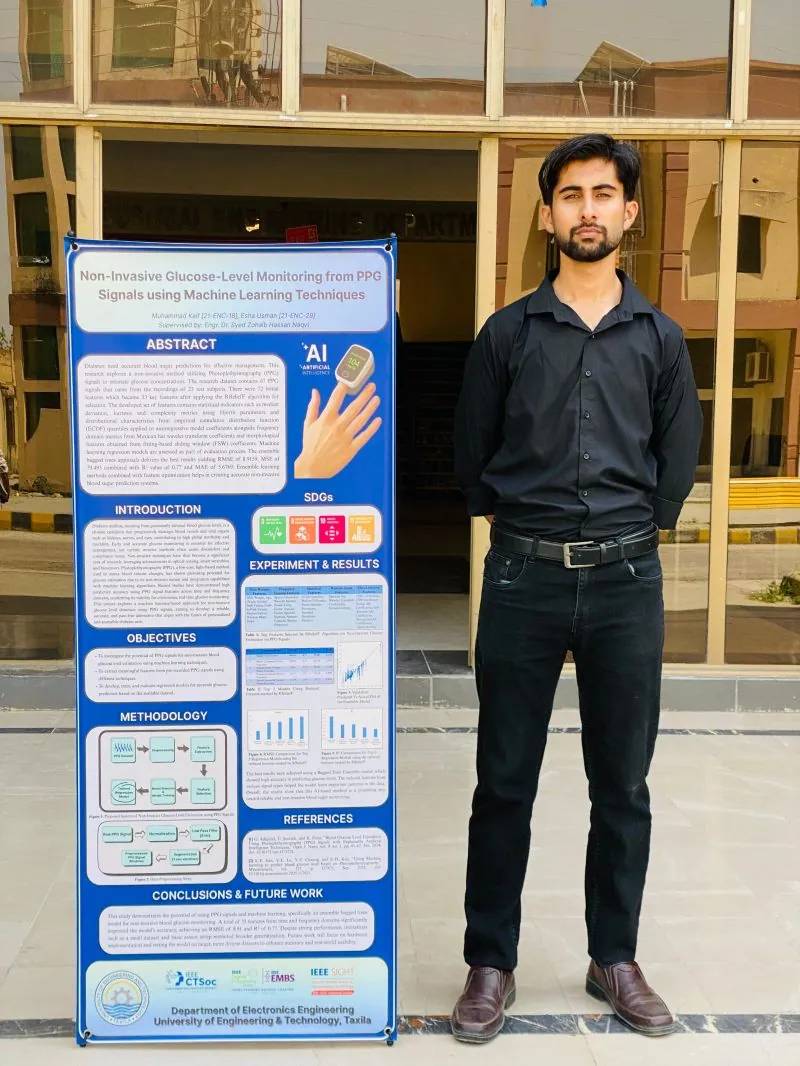
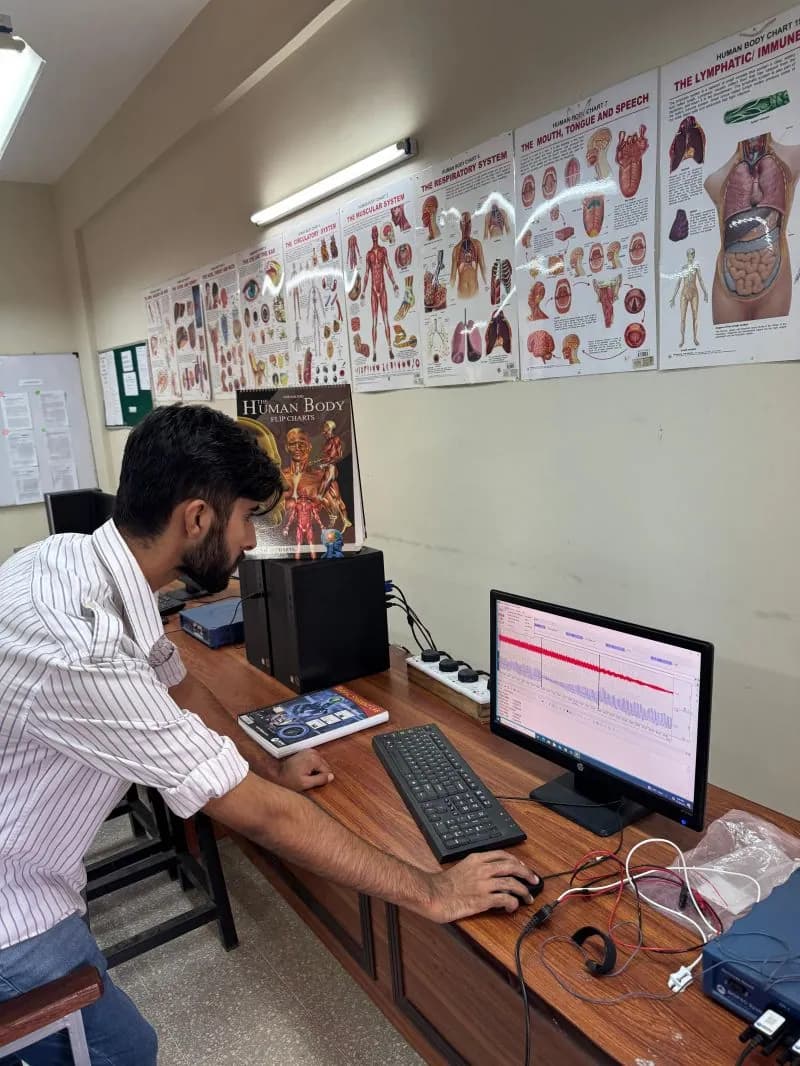
Non-invasive blood glucose estimation from photoplethysmography (PPG), the optical pulse signal that smartwatches and medical wearables already record. My final-year research project in Electronics Engineering at UET Taxila, Pakistan: a complete biomedical signal-processing and machine-learning pipeline in MATLAB, from raw PPG to a glucose estimate, reaching an RMSE of 8.92 mg/dL.
- Org
- UET Taxila
- Year
- 2024
- Status
- Research
- Channels
- CH2CH3
The problem
Finger-prick tests are painful and can't run continuously. The aim: estimate blood glucose from a PPG signal, the optical pulse a wearable already measures.
What I built
- A PPG pre-processing pipeline to clean and segment the signal
- Multi-domain feature extraction with RReliefF feature selection
- An ensemble bagged-tree regressor, trained and evaluated in MATLAB
Stack
MATLAB · Biomedical signal processing · RReliefF · Ensemble bagged trees
Results
- RMSE of 8.92 mg/dL
- Final-year research project at UET Taxila (2024)
The pipeline pre-processes and segments the raw PPG signal, extracts features across multiple domains, keeps the ones that track blood glucose with RReliefF feature selection, and trains an ensemble of bagged decision trees for the regression.
The work was defended in December 2024 and shown at the FYP Open House 2K25 at UET Taxila. It started my focus on medical wearables, continuous glucose monitoring and on-device health analytics, which I now work on in industry.
Gallery
Straight from the archive: every photo I could dig up for this build.